Hello, this is Daily Stock, delivering precise insights into the AI ecosystems and value-chain performances of US Big Tech companies.
Key Takeaways
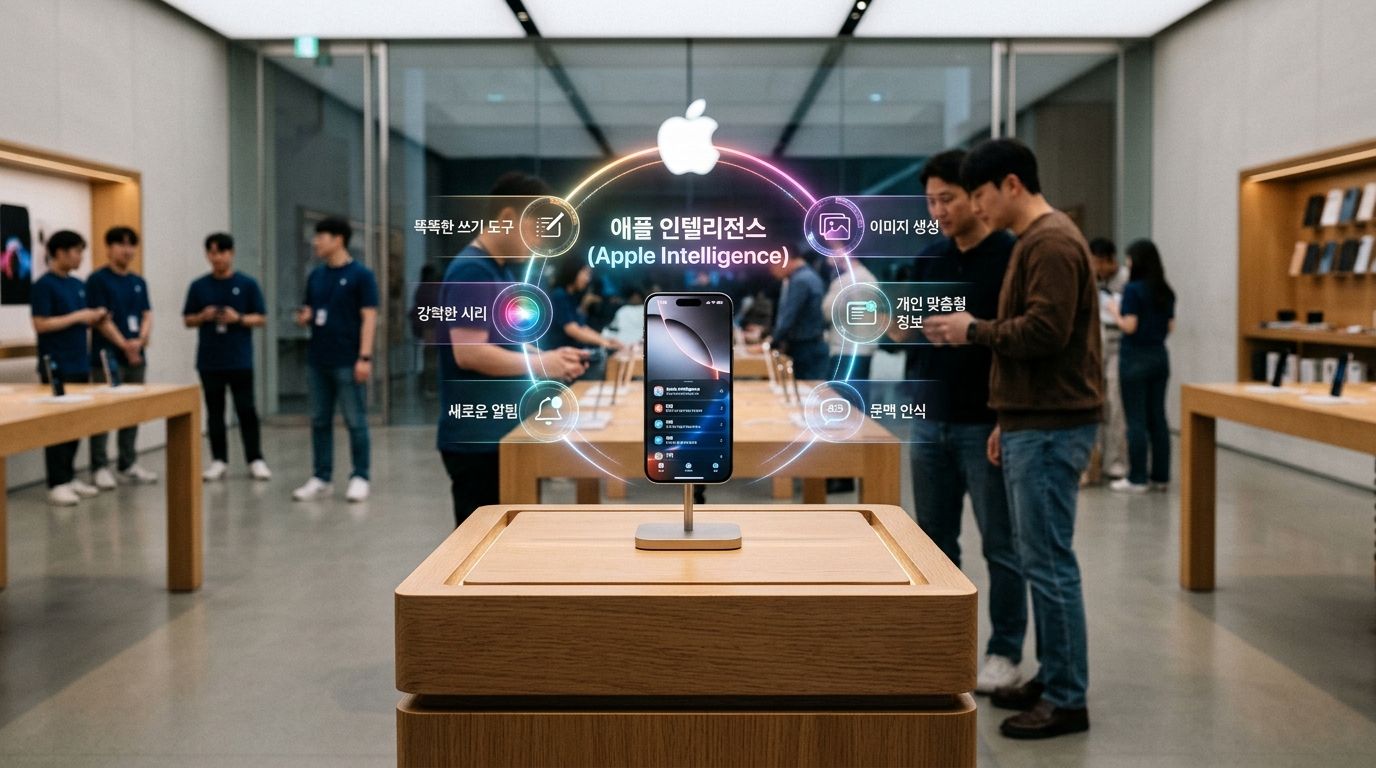
Starting with the iPhone 16 series, Apple (AAPL) is actively deploying its full-fledged generative AI ecosystem, "Apple Intelligence."
With hardware differentiation slowing in the smartphone market, a pivotal variable is how effectively on-device AI capabilities—powered by proprietary NPU performance—can drive replacement cycles for the premium Pro lineup.
Because software features will roll out in phases, the full realization of upgrade demand may be distributed over time. Meanwhile, margin resilience continues to anchor the stock price against elevated 10-year US Treasury yields and tech valuation pressures.
Current Situation Overview
Even as the global smartphone market matures, Apple's primary cash cow—the iPhone Pro lineup—has demonstrated steady premium demand.
During the early launch phase of the iPhone 16, lead times were slightly shorter than those of its predecessor, raising some demand concerns. However, this largely reflected easing supply chain bottlenecks combined with strategic shifts in initial inventory distribution.
Market attention is currently focused on the sequential rollout schedule: starting with text summaries and photo clean-up tools in iOS 18.1, moving to image generation and ChatGPT integration in iOS 18.2, and ultimately culminating in Siri's intelligent personalization features.
Whether an on-device AI supercycle materializes will depend on the pace of expanding non-English language support and navigating regulatory hurdles in major international markets such as Europe and China.
Meanwhile, global financial market volatility continues as of October 25, 2026.
In the domestic South Korean market, the KOSPI closed at 5,550.30 and the KOSDAQ at 751.69, while the USD/KRW exchange rate finished at 1,326.90 won.
The US Nasdaq Composite stood at 25,955.34. Daily Stock's proprietary Fear & Greed Index indicates Nasdaq sentiment remains subdued in "Fear" at 21, compared to "Fear" at 22.1 a week ago, 32.5 a month ago, and 27.6 three months ago.
The domestic KOSPI Fear & Greed Index also registered "Extreme Fear" at 7.1, following 6.6 a week ago, "Neutral" at 52 a month ago, and "Extreme Fear" at 13.5 three months ago, pointing to continued caution toward risk assets across the board.
Financial Analysis
Compared to Big Tech peers, Apple maintains a disciplined approach to hyperscale datacenter capital expenditures (CAPEX), building out a hybrid cloud and on-device AI architecture.
Earnings power remains supported by the high-margin Services division (App Store, Cloud, AppleCare, Advertising), which cushions fluctuations in hardware revenue.
| Segment | Key Characteristics & Financial Contribution | Key Factors to Watch |
|---|---|---|
| **iPhone Pro Lineup** | Accounts for ~50% of total revenue; drives high average selling prices (ASP) | Upgrade rates of 2–3-year-old models catalyzed by Apple Intelligence |
| **Services** | Maintains gross margins in the 70% range; expanding subscriber base | AI search partnership revenues and potential monetization of proprietary AI services |
| **Capital Expenditures (CAPEX)** | Disciplined spending relative to hyperscalers; leverages Private Cloud Compute | Balance of on-device processing and expansion pace of proprietary Apple Silicon servers |
| **Share Buybacks & Dividends** | Protects EPS via $80B–$100B in annual share repurchases | Sustainability of Free Cash Flow (FCF) generation and capital return intensity |
Expanding the share of on-device processing via Apple Silicon (such as the A18 Pro) helps mitigate server infrastructure depreciation burdens, structurally supporting operating margins.
However, the effects of softening purchasing power in emerging markets and rising component costs on hardware gross margins warrant continued observation.
Valuation
Apple has long commanded a premium valuation typical of a premium software platform rather than a traditional hardware manufacturer.
While the intraday share price remains unconfirmed (based on the latest verified data), Apple's forward price-to-earnings (P/E) multiple has traded near the upper band of its historical range, around 30x.
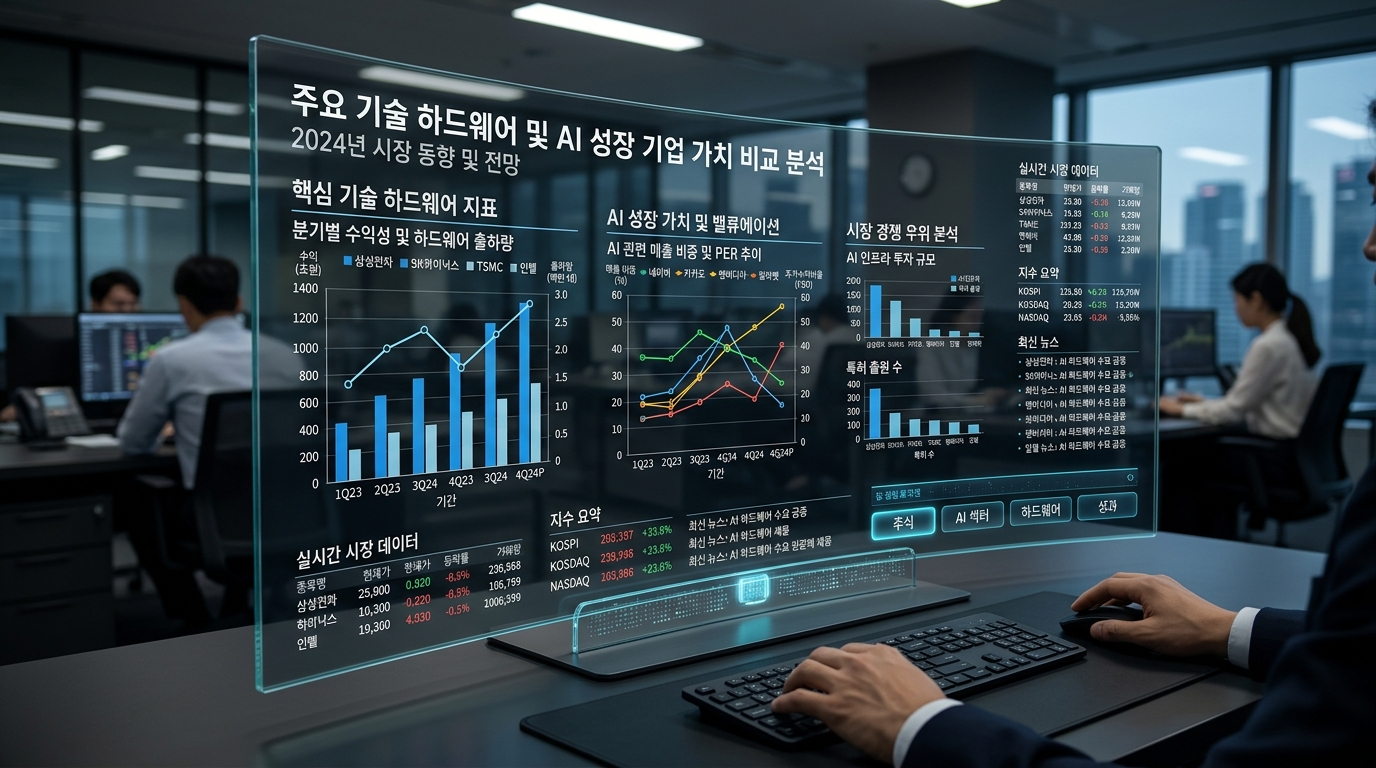
Sustained elevated levels in the 10-year US Treasury yield (US10Y) can exert multiple-compression pressure on high-multiple tech equities.
While infrastructure companies within the Nasdaq 100 or the Philadelphia Semiconductor Index (SOX) justify high multiples through rapid earnings expansion, Apple faces the task of defending its premium multiple alongside mid-to-high single-digit revenue growth.
Institutional & Expert Analysis
Major Wall Street investment banks and research firms remain divided between optimism over Apple's pragmatic commercialization path and caution regarding the pacing of visible consumer innovation.
Morgan Stanley and J.P. Morgan suggest that an active installed base of over one billion iPhones, paired with privacy-centric utility features, will create strong ecosystem lock-in and spur upgrade cycles.
Conversely, some market analysts note that because key capabilities—such as Siri's advanced contextual awareness—will roll out gradually through 2025 and beyond, expecting an immediate surge in hardware sales may be premature.
Ultimately, full-year performance will likely be determined not by first-week launch figures, but by sales durability extending through the holiday shopping season and into the first half of the following year as feature updates mature.
Risk Factors
The most immediate risk is consumer expectations outpacing initial AI feature rollouts.
If everyday real-world utility falls short of early marketing expectations, consumers may adopt a wait-and-see stance and defer upgrades to future hardware generations.
Second are geopolitical and regulatory risks.
Delays in rolling out certain features in the European Union due to the Digital Markets Act (DMA), along with regulatory approvals required for local LLM partnerships in China, present headwinds to international expansion.
Third are macroeconomic conditions.
A stronger US dollar (rising DXY) can dilute translated earnings from Apple's substantial international footprint, while spikes in the VIX (Volatility Index) may prompt profit-taking in high-valuation mega-cap equities.
Investment Perspective Summary
Apple has adopted a pragmatic strategy in the generative AI race, bypassing excessive infrastructure spending wars while focusing on its dominant reach at the end-user edge.
Sales of the iPhone 16 Pro lineup may follow a steady, upward trajectory that correlates with sequential feature updates rather than a single front-loaded spike.
From an investor standpoint, a medium- to long-term horizon focused on Services margin stability and daily on-device AI adoption rates is preferable to reacting to short-term quarterly variance.
With interest rate volatility and tech multiple pressures interacting, a disciplined, scenario-based approach to assessing valuation stability during periods of shifting market sentiment remains advisable.
Investor Checkpoint Q&A
Q1. Why is there demand polarization between the standard and Pro iPhone 16 models?
A1. Hardware differentiators—including the higher-performing A18 Pro silicon, high-refresh-rate displays, and advanced telephoto cameras—remain concentrated in the Pro lineup. Furthermore, high-end consumers seeking optimal on-device AI performance tend to gravitate naturally toward Pro-tier devices.
Q2. What does the rollout roadmap look like for Apple Intelligence?
A2. Baseline features, including text proofreading, summarization, and photo clean-up tools, arrive via iOS 18.1, followed by Image Playground and ChatGPT integration in iOS 18.2. Next-generation Siri features, including personal context and on-screen awareness, are projected to arrive in subsequent major updates.
Q3. How does Apple's AI strategy fundamentally differ from peers like Microsoft, Google, and Meta?
A3. While other Big Tech firms deploy massive cloud CAPEX to build out hyperscale datacenters, Apple combines efficient on-device models with Private Cloud Compute, reducing infrastructure overhead while prioritizing user privacy.
Q4. How significantly do global regulatory environments impact the expansion of Apple Intelligence?
A4. Regulatory compliance under the EU's Digital Markets Act (DMA) has created risks of delayed or localized feature rollouts across Europe. Similarly, navigating China's regulatory landscape requires partnerships with local AI providers, resulting in regional variations in rollout timing.
Q5. How do the 10-year US Treasury yield and the US Dollar Index (DXY) affect Apple's stock price?
A5. A rise in the 10-year yield raises discount rates applied to future cash flows, compressing valuation multiples for growth stocks. Additionally, a stronger dollar (higher DXY) negatively impacts consolidated revenue and net income when converting non-US sales—which comprise more than half of total revenue—back into US dollars.