Hello, this is Daily Stock, analyzing macroeconomic context and structural shifts in key market leaders.
Executive Summary
As Samsung Biologics accelerates its ramp-up following the early operation of Plant 5, the company has surpassed KRW 4 trillion in cumulative revenue through the third quarter of this year while maintaining strong full-year order momentum.
With Plants 1 through 4 operating at virtually full capacity and commercial contributions from Plant 5 and the Rockville facility in the U.S. becoming visible, the company raised its full-year earnings guidance.
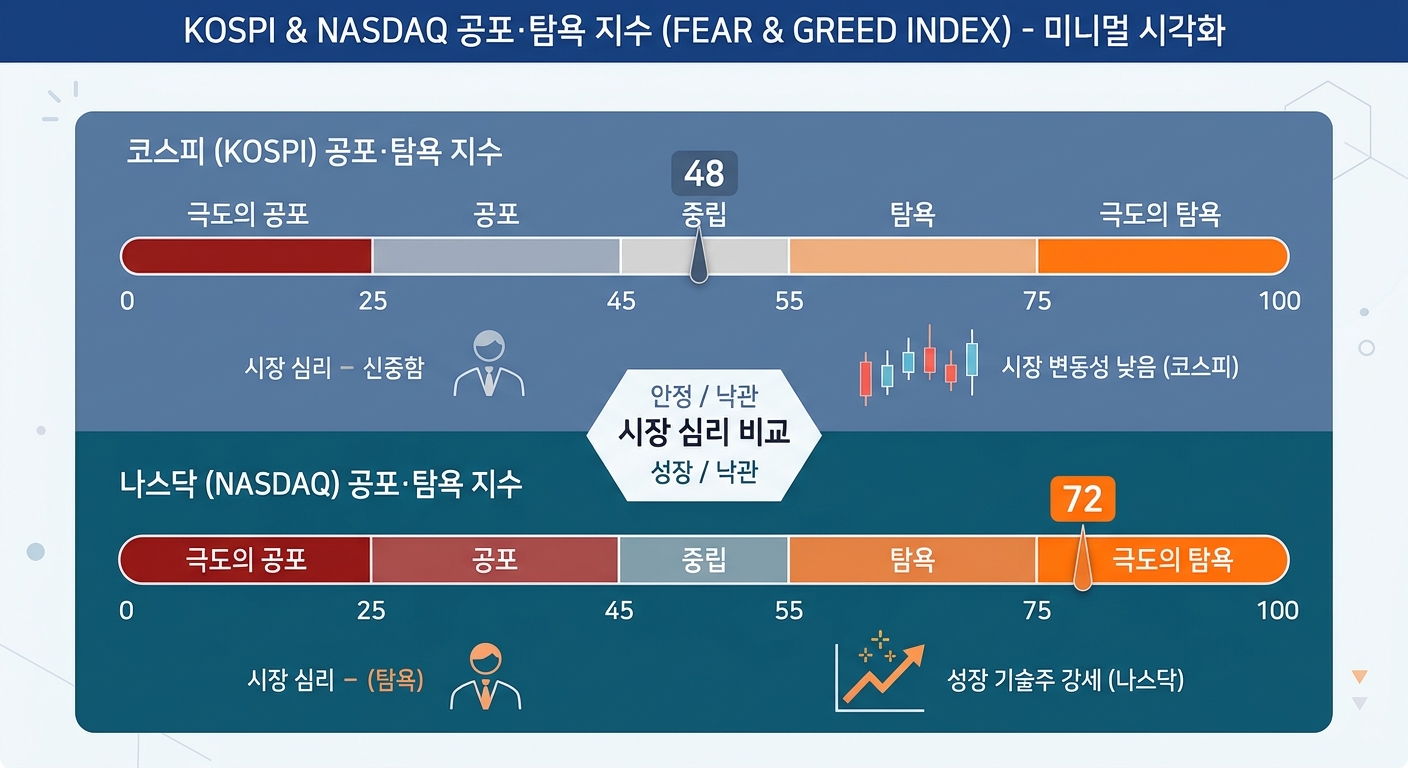
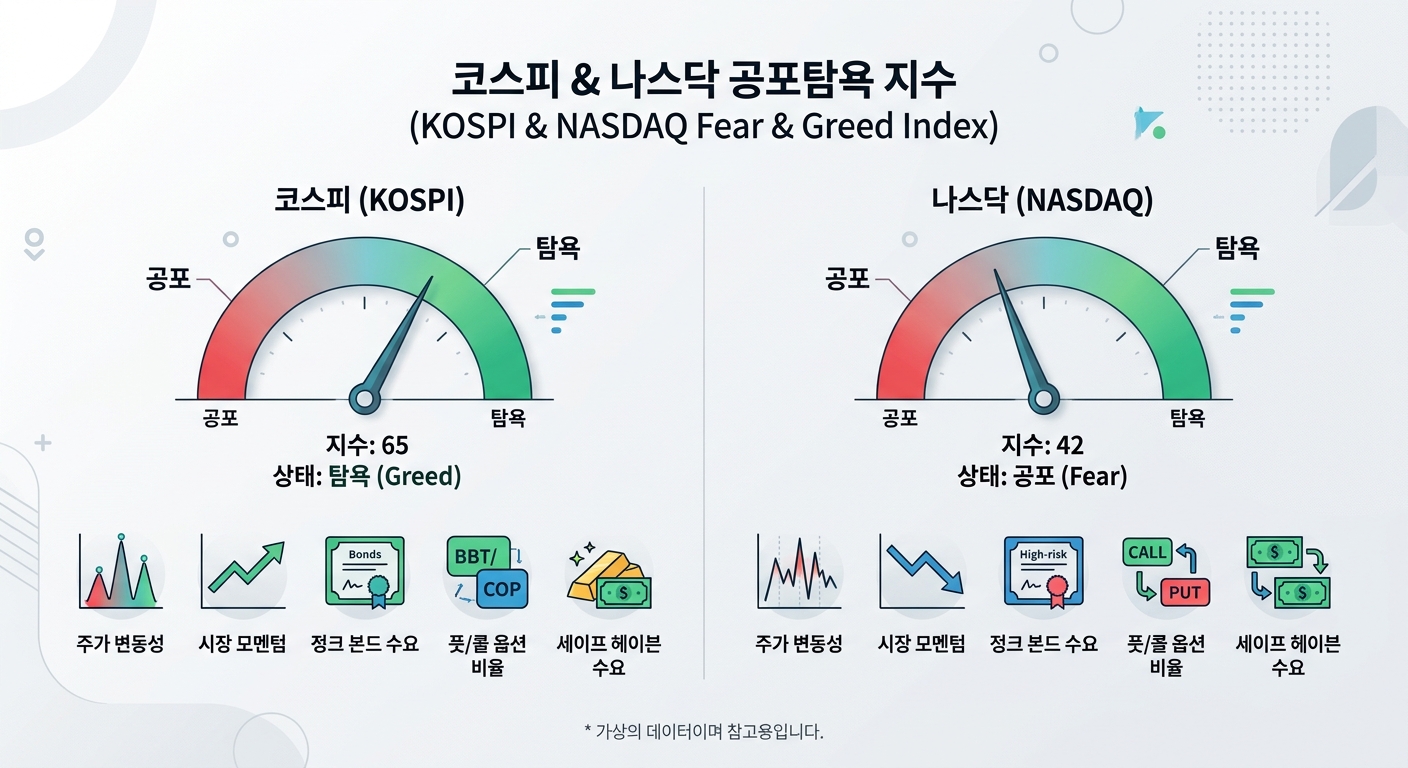
Although the Daily Stock Fear & Greed Index points to "Extreme Fear (7.1)" for the KOSPI and "Fear (21)" for the Nasdaq, selective institutional and foreign capital inflows into this global defensive growth stock with high earnings visibility are drawing market attention.
Current Market Situation
Samsung Biologics successfully stabilized the 180,000-liter Plant 5—the first phase of its Second Bio Campus—five months ahead of schedule, and is accelerating process performance qualification (PPQ) and validation batch production.
For the third quarter of 2026, preliminary consolidated revenue reached KRW 1.4903 trillion, and operating profit hit KRW 640.1 billion, breaking all-time quarterly records.
Backed by these figures, cumulative revenue through Q3 reached KRW 4.0684 trillion and operating profit stood at KRW 1.8073 trillion, surpassing KRW 4 trillion in just three quarters.
Supported by steady order intake and high operational efficiency, the company raised its full-year consolidated revenue growth forecast from the previous 15–20% to the top end of 20% or higher (annual revenue of approximately KRW 5.4684 trillion).
From a market supply-demand perspective, as the KOSPI navigates volatility around the 5,550.30 level and the KOSDAQ around 751.69, selective inflows from foreign and institutional investors have been observed in large-cap biopharma stocks capable of generating stable mid-to-long-term cash flows amid cyclical fluctuations in semiconductors and autos.
The USD/KRW exchange rate fluctuating around KRW 1,326.90 also supports foreign-exchange gains and topline resilience for the contract development and manufacturing organization (CDMO) business, which has a high proportion of USD-settled contracts.
| Classification | Q3 2026 (Preliminary) | Q3 2025 (Actual) | YoY Change | Q3 2026 Cumulative |
|---|---|---|---|---|
| **Consolidated Revenue** | KRW 1.4903 trillion | KRW 1.2575 trillion | +18.5% | KRW 4.0684 trillion (+24.4%) |
| **Consolidated Operating Profit** | KRW 640.1 billion | KRW 633.5 billion | +1.0% | KRW 1.8073 trillion (+17.3%) |
| **Operating Margin (OPM)** | 42.95% | 50.38% | -7.43%p | 44.42% |
| **Cumulative Orders** | Around $22 billion | - | Steady upward trend | Exceeded KRW 4 trillion annually |
(※ Intraday share price tracking was limited based on market close; the latest confirmed closing price of KRW 1,417,000 can serve as a reference.)
Financial Analysis
Unlike top-line expansion, the operating margin for the third quarter moderated slightly to 42.95% year-over-year.
This was driven by higher raw material import costs, as well as temporary initial depreciation and operating expenses incurred during the early ramp-up of Plant 5 and the stabilization following the acquisition of the Rockville facility.
Nonetheless, an operating margin exceeding 40% confirms top-tier profitability and competitive strength even among global leading CDMO peers.
As of the end of Q3 2026, total assets reached KRW 12.6702 trillion, with a debt-to-equity ratio of 45.8% and a net-debt ratio of 9.2%, demonstrating exceptional financial soundness despite heavy capital expenditure for capacity expansion.
With robust current ratios and strong cash-generating capabilities, the company is analyzed to have sufficient financial room for the upcoming construction of Plant 6 within the Second Campus, as well as investments in next-generation modalities such as peptides and ADCs (antibody-drug conjugates).
Valuation
Samsung Biologics maintains a valuation premium compared to global peers such as Switzerland's Lonza and China's WuXi Biologics.
While Lonza's annual growth remains in the mid-to-high single digits, Samsung Biologics is proving both world-leading capacity at 784,000 liters and revenue growth rates in the 20% range.
Potential tailwinds from the legislative progress of the U.S. Biosecure Act also serve as an upside valuation factor.
However, to justify high price-to-earnings (P/E) multiples, booking remaining capacity at Plant 5 and securing pre-orders for Plant 6—where groundbreaking is discussed for later this year—will be essential verification benchmarks.
Compared to low-PBR themes seen among other KOSPI 200 large caps (e.g., semiconductors and automotive), relative valuation pressures persist; hence, solid earnings growth must offset any potential multiple contraction.
Expert and Institutional Analysis
Domestic brokerages have largely maintained a "Buy" rating, highlighting that third-quarter earnings beat market consensus.
Daol Investment & Securities and Kiwoom Securities positively evaluated the actual revenue contributions from Rockville and Plant 5, setting target prices around the KRW 2,000,000 level.
Easing labor-related uncertainties and court rulings favoring normal operations have alleviated supply chain concerns among global big pharma clients, advancing new contract negotiations and driving institutional sentiment higher.
In contrast, some institutions like Shinyoung Securities have adjusted target prices conservatively, raising the weighted average cost of capital (WACC) to factor in high foreign-exchange procurement costs and the pressure of simultaneously securing order backlogs for Plant 5, Rockville, and Plant 6 over the next three years.
Ultimately, the consensus among institutional analysts is that the speed at which capacity expansion converts into actual revenue and backlog will be the primary driver of future stock re-rating.
Risk Factors
The primary risk factor is the depreciation burden and margin compression inherent in large-scale facility expansion during early operational phases.
Given that full commercial manufacturing at Plant 5 begins in 2027, the high proportion of fixed costs during the early PPQ batch phase could expand short-term operating margin volatility.
From a macroeconomic standpoint, foreign-exchange valuation swings driven by rapid USD/KRW fluctuations and subdued biotech sentiment resulting from a global economic slowdown pose potential headwinds.
Additionally, U.S. drug pricing pressures via the Inflation Reduction Act (IRA) and uncertainty regarding the final legislative timing of the Biosecure Act remain variables that could lead clients to delay order placements.
While the Bank of Korea's base rate cuts provide a favorable backdrop for growth stock valuations, risk-off sentiment could emerge if domestic macroeconomic conditions deteriorate.
Investment Perspective
At this juncture, Samsung Biologics stands as a leading core holding in the KOSPI, backed by dominant market leadership in global pharmaceutical CMO/CDMO and high earnings predictability.
In the short term, broad macro headwinds, highlighted by the Daily Stock Fear & Greed Index at 7.1 (Extreme Fear) for the KOSPI, could cap immediate upside.
Consequently, rather than chasing short-term gains, a staged dollar-cost averaging approach is prudent—monitoring commercial batch revenue recognition from Plant 5, a turnaround to profitability at the U.S. Rockville site, and official contract announcements for Plant 6.
Investors should gauge long-term portfolio allocation while closely monitoring foreign spot and futures flow alongside exchange rate stabilization around the KRW 1,320 level.
Investor Checklist Q&A
Q1. When will the early operation of Plant 5 be fully reflected in financial results?
Following its early completion, Plant 5 is currently producing process performance qualification (PPQ) and validation batches. Revenue recognition is scheduled to begin in the second half of 2026, with meaningful profit contributions expected from 2027 as full commercial batch deliveries accelerate.
Q2. What is the significance of exceeding KRW 4 trillion in cumulative Q3 orders and revenue?
With Plants 1–4 operating near full capacity, large-scale contract expansions with global top-tier pharmaceutical companies have driven momentum, serving as the practical catalyst that pushed the full-year revenue growth guidance up to 20%.
Q3. How do exchange rate fluctuations affect Samsung Biologics' profitability?
Because CDMO contracts are primarily settled in U.S. dollars, a higher USD/KRW exchange rate boosts converted won-denominated revenue and operating profit, though it may also increase raw material import costs and mark-to-market foreign exchange valuation volatility.
Q4. What are the plans and associated risks for Plant 6 at the Second Bio Campus?
While the company is preparing for Plant 6 construction, fixed-cost burdens from heavy capital expenditure could draw conservative views from the market if order intake for Plant 5 and the U.S. Rockville site does not scale sufficiently fast.
Q5. How is Samsung Biologics' defensiveness evaluated during KOSPI market corrections?
Because the CDMO business model relies on multi-year, lock-in commercial supply contracts, its cyclical sensitivity is considerably lower than that of standard manufacturing sectors, providing solid potential as a defensive growth stock within the KOSPI.