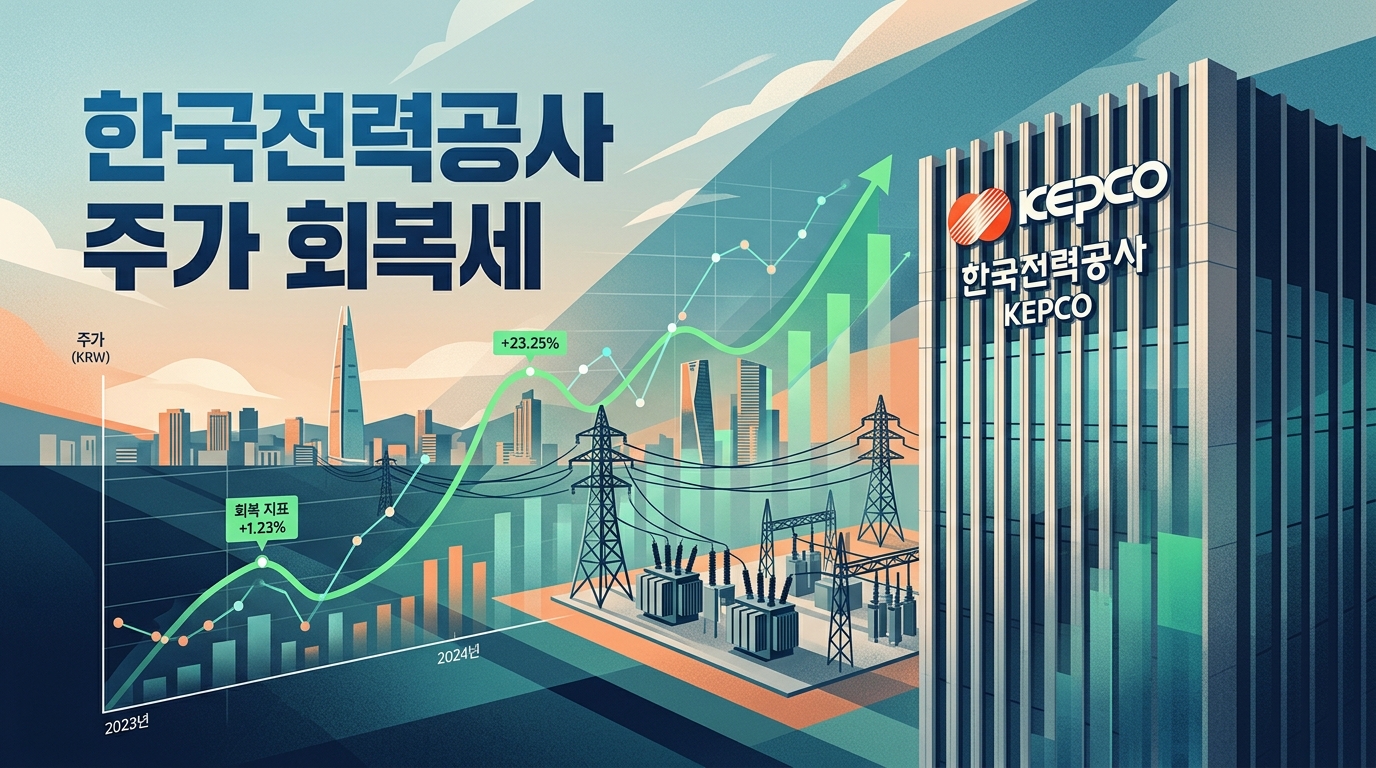
Hello, this is Daily Stock, delivering precise insights on macro market trends and corporate fundamentals.
Key Summary
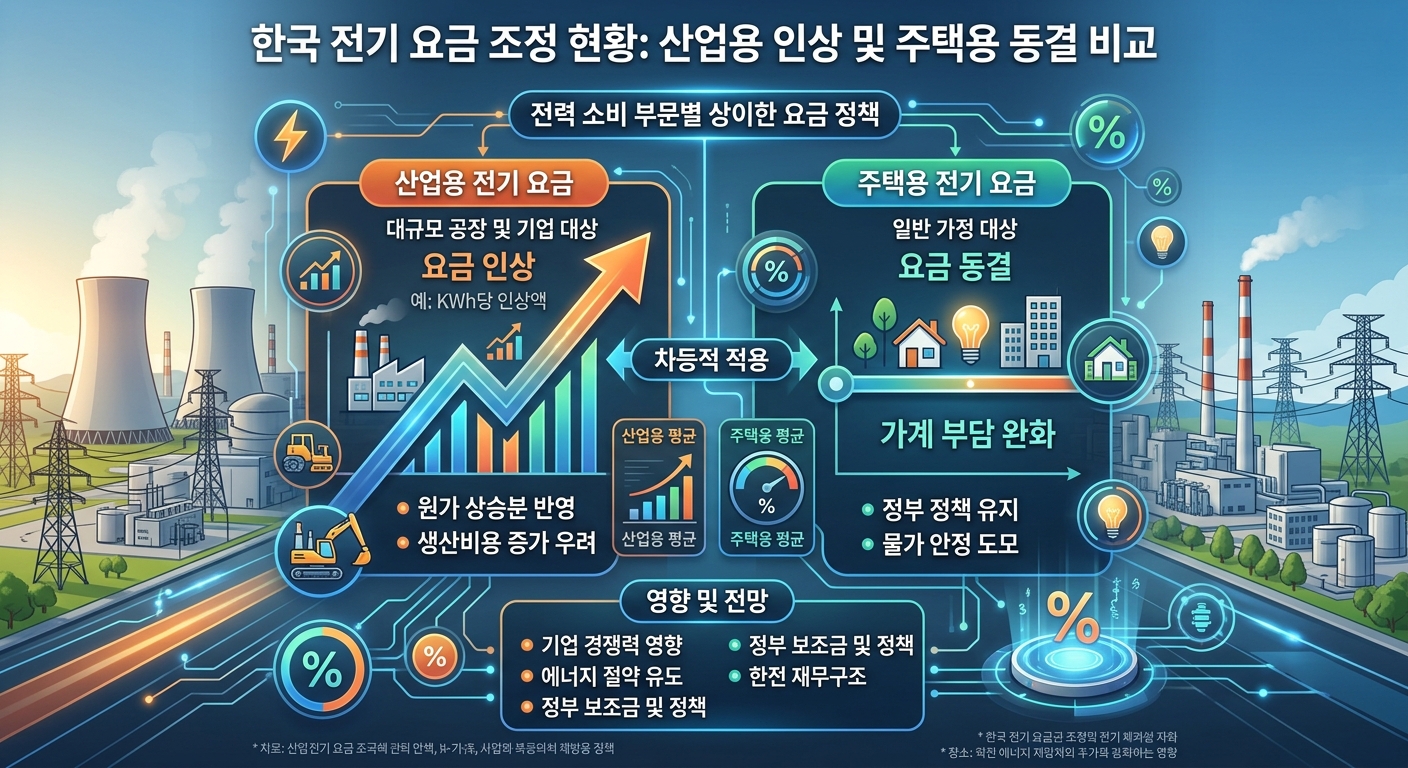
To stabilize consumer inflation, the South Korean government and Korea Electric Power Corporation (KEPCO) decided to freeze residential and commercial electricity rates while raising industrial tariffs by an average of 9.7%.
This measure concentrates rate hikes on industrial consumers, who account for 53.2% of total electricity consumption, aiming to secure approximately 4.7 trillion won in additional annual sales revenue.
Considering the accumulated deficit of around 41 trillion won since 2021, total debt exceeding 200 trillion won, and daily interest expenses surpassing 10 billion won, this rate adjustment is expected to serve as a watershed moment for liquidity defense.
However, because the cost burden is transferred to key export heavyweights such as semiconductors and steel, it brings complex ripple effects across overall corporate profit mixes in the KOSPI market.
Current Market Context
As of the close on October 21, 2026, the domestic stock market maintained a volatile session, with the KOSPI closing at 5,735.66 and the KOSDAQ at 792.76.
On the same day, the KRW/USD exchange rate closed at 1,324.80 won, preserving tension in the foreign exchange market.
According to the Daily Stock Fear & Greed Index, the KOSPI Fear & Greed Index stands at 9.6, remaining in "Extreme Fear" territory.
This indicates that market sentiment continues to be severely depressed compared to 1 week ago (9, Extreme Fear), 1 month ago (30.6, Fear), and 3 months ago (13.3, Extreme Fear).
Meanwhile, the Nasdaq Fear & Greed Index recorded 27.2 (Fear), extending guarded sentiment in line with levels from 1 week ago (26.7), 1 month ago (34.2), and 3 months ago (28.5).
KEPCO's stock price movement for the day remains unconfirmed for intraday quotes (based on the latest verified data), yet expectations of earnings recovery driven by the Q4 industrial tariff hike and fuel cost trajectories intersect.
Foreign institutional flows show limited net buying amid strong dollar pressure, focusing on whether the utility sector can sustain an operating profit turnaround.
Among top KOSPI 200 large-cap manufacturing exporters, concerns coexist over operating margin erosion resulting from higher electricity cost inputs.
| Category | Key Details & Figures | Specific Notes |
|---|---|---|
| **Tariff Adjustment** | Industrial rates raised by an avg. of 9.7% (Industrial Eul: +10.2%, Industrial Gap: +5.2%) | Residential and commercial tariffs frozen |
| **Power Consumption Share** | Industrial accounts represent ~1.7% of customers, but 53.2% of power volume | High-voltage industrial users (Eul) dominate volume |
| **Expected Financial Impact** | Generates approximately 4.7 trillion won in additional annual sales revenue | Funding to reduce KEPCO's accumulated deficit |
| **Current Debt Burden** | Accumulated deficit around 41 trillion won; total debt exceeds 200 trillion won | Daily interest expenses roughly 11.0 to 12.0 billion won |
| **Macro Environment** | KRW/USD at 1,324.80 won; KOSPI Fear & Greed Index at 9.6 | Extended "Extreme Fear" phase |
Financial Analysis
On the surface, KEPCO's earnings structure has sustained an operating surplus trend supported by the downward stabilization of international energy prices and wholesale System Marginal Prices (SMP).
While consolidated performance—including power generation subsidiaries—showed improvement, standalone metrics continue to highlight vulnerability under heavy power purchase costs and financing burdens.
Due to the inverted margin structure sustained from 2021 to 2023, the accumulated deficit of approximately 41 trillion won has solidified into massive debt obligations.
With annual financial interest expenses exceeding 4 trillion won, a substantial portion of the operating profit generated from core operations is depleted paying interest rather than amortizing principal.
Securing roughly 4.7 trillion won in increased annual cash inflow through this industrial rate adjustment establishes the baseline capacity to cover interest expenses and trim down some debt.
However, factoring in capital expenditure (CAPEX) requirements for new transmission and distribution grids, as well as advanced infrastructure such as the Yongin Semiconductor Mega Cluster, fully transitioning Free Cash Flow (FCF) into sustained surplus may require more time.
Valuation
KEPCO's PBR (Price-to-Book Ratio) remains in a historical trough near 0.3x–0.4x due to prolonged capital erosion from accumulated deficits and structural utility discounts.
Compared to major global electric utilities, which are valued at an average PBR of 0.8x–1.2x, the stock trades at an extreme discount.
Regulatory risks—in which the domestic electricity tariff scheme fails to fully reflect the fuel cost pass-through system—have served as a structural discount factor.
If the industrial rate hike settles smoothly and bond issuance ceiling regulations normalize, the recovery pace of BPS (Book Value Per Share) will become the primary benchmark for a valuation re-rating.
Nevertheless, with the timing of dividend resumption remaining uncertain, prevailing consensus suggests that deleveraging must precede short-term valuation normalization.
Expert & Institutional Analysis
Domestic brokerage houses offer conservative assessments, noting that while this tiered industrial rate increase is meaningful for bottom-line defense, it falls short of wiping out the accumulated deficit in a short timeframe.
Major equity research teams have maintained or slightly revised down their target prices, keeping a close eye on Q4 fuel unit costs and SMP volatility.
Institutional investors highlight the risk that directly hiking electricity tariffs for large corporations (Industrial Eul) could elevate cost ratios for core KOSPI 200 manufacturers such as Samsung Electronics and SK Hynix.
The reality that utility price adjustments are constrained between the Bank of Korea's monetary policy shifts and government anti-inflation mandates also underpins neutral ratings.
Foreign institutions evaluate that without guaranteed continuity in rate adjustments tied to South Korea's grid investment commitments, structural re-ratings will remain limited.
Risk Factors
The most direct risk stems from potential spikes in global crude oil and liquefied natural gas (LNG) prices triggered by geopolitical instability, including Middle Eastern conflicts.
If fuel costs resume an upward trajectory, electricity purchase costs from generation subsidiaries could surge past the fuel cost adjustment cap (+5 won/kWh), reigniting inverted margin risks.
A sustained high KRW/USD exchange rate is another major factor, driving up settlement costs for imported raw materials and intensifying cost pressures.
An exchange rate hovering in the mid-1,320s directly affects KEPCO's foreign exchange translation gains and losses, posing a hidden threat to profitability.
Strong resistance from industrial sectors and a potential economic slowdown also loom as headwinds.
If manufacturing utilization rates decline and industrial electricity consumption contracts, the expected 4.7 trillion won in tariff hike benefits could fail to materialize in full.
Investment Takeaways
Emerging from severe financial distress, KEPCO is entering a trajectory of cash flow recovery through the normalization of industrial rates.
In the near term, the combination of approximately 4.7 trillion won in additional annual revenue and stabilized SMP prices provides potential downward rigidity for operating profit.
However, massive debt exceeding 200 trillion won and annual interest burdens in the 4 trillion won range remain structural shackles curbing strong upside momentum.
With the KOSPI Fear & Greed Index at 9.6, indicating extreme fear, a measured approach focused on monitoring commodity prices and foreign exchange movements is warranted over aggressive leverage strategies.
A prudent investment stance involves confirming the utility's unique defensive stability and turnaround momentum, while closely tracking dividend resumption timelines and debt reduction roadmaps.
Frequently Asked Questions (FAQ)
Q1. What are the scale and targets of this industrial electricity rate hike?
Industrial electricity rates are increased by an average of 9.7%: large-scale power users (Industrial Eul) face a 10.2% increase, while small and medium-sized enterprises (Industrial Gap) see a 5.2% increase. Residential rates and commercial rates for small business owners were frozen to limit the impact on consumer inflation and living costs.
Q2. What is the expected annual revenue improvement for KEPCO?
Because industrial clients consume 53.2% of South Korea's total electricity output, this tariff adjustment is projected to boost annual electricity sales revenue by approximately 4.7 trillion won.
Q3. Can KEPCO's 41 trillion won accumulated deficit be fully resolved by this hike?
An additional 4.7 trillion won in annual revenue covers yearly interest expenses (exceeding 4 trillion won per year) and allows for modest principal repayment. Sustaining long-term operating surpluses over several years is required to fully eliminate accumulated deficits and normalize the balance sheet.
Q4. How does this affect major KOSPI manufacturing corporations?
Power-intensive export heavyweights across semiconductors, steel, and petrochemicals will incur hundreds of billions of won in additional electricity overhead annually. This can create near-term pressure on manufacturing operating profit margins.
Q5. What are the key variables investors should monitor going forward?
The stability of the KRW/USD exchange rate, international commodity prices (crude oil and LNG), and trends in wholesale electricity prices (SMP). Additionally, legislative developments supporting national power grid expansion and regulatory changes regarding corporate bond issuance ceilings will mark pivotal turning points for long-term valuation.