Hello, this is Daily Stock.
Key Summary
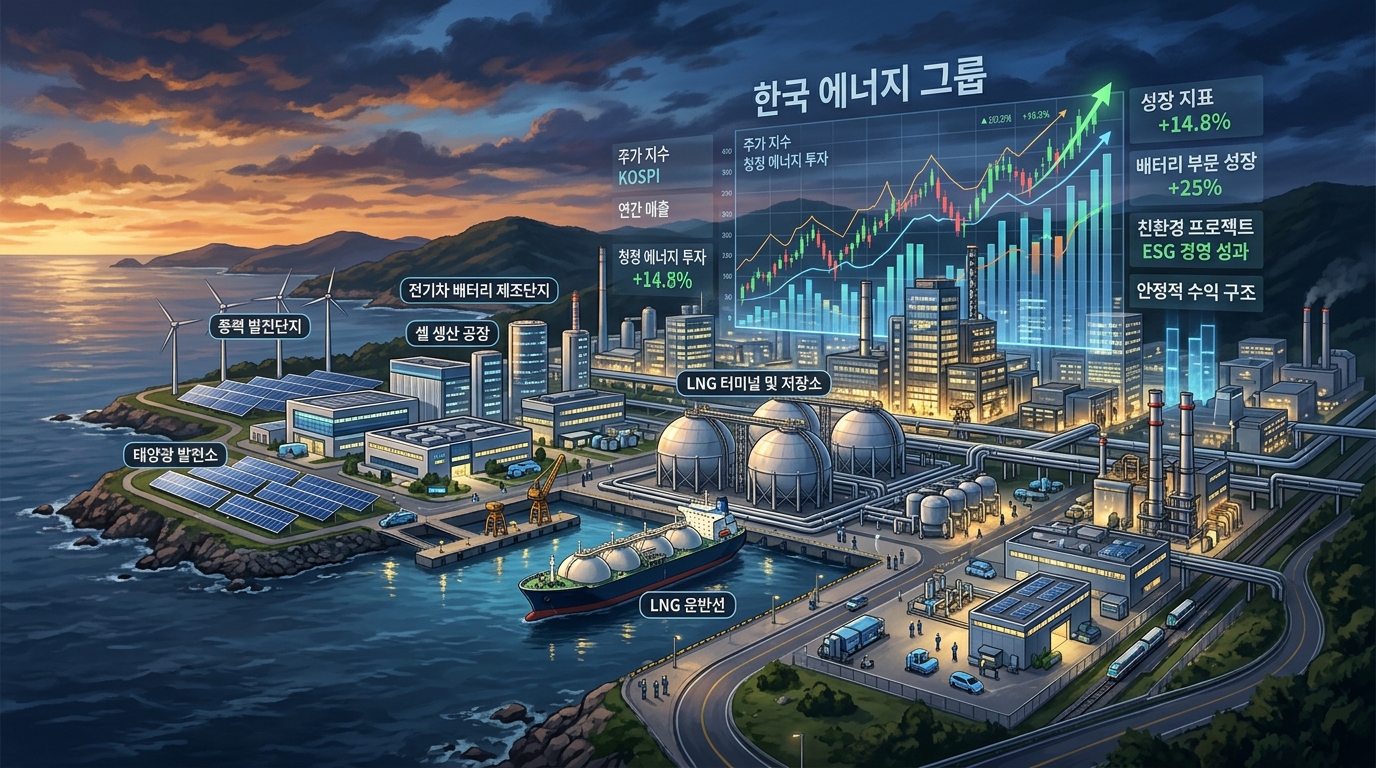
SK Innovation has reorganized itself into a massive integrated energy holding entity with total assets of KRW 106 trillion through a horizontal merger with its unlisted, highly profitable affiliate SK E&S.
The core rationale behind this merger is to cushion the heavy financial burden caused by large-scale capital expenditures (CAPEX) at its battery subsidiary, SK On, with SK E&S's stable annual cash-generating power (EBITDA).
Amid a prolonged EV chasm and refining margin volatility, the merged entity is accelerating structural improvements targeting an annual EBITDA of KRW 20 trillion by 2030.
Market Overview

In the domestic equity market, foreign investor capital flow volatility has widened as the USD/KRW exchange rate recorded 1,337.80 won, while the KOSPI index is searching for direction around the 5,668.05 level.
The KOSDAQ index stands at 794.78 and the Nasdaq index at 26,140.03. According to Daily Stock's proprietary Fear & Greed Index, the KOSPI registered in 'Extreme Fear (5.3)'.
The KOSPI Fear Index continues to reflect extreme contraction, following Extreme Fear (15.5) a week ago, Fear (25) a month ago, and Extreme Fear (11.6) three months ago.
The Nasdaq Fear & Greed Index is also in Extreme Fear (17.9), showing a noticeable rise in caution compared to Neutral (46.5) a week ago and Fear (27.3) a month ago.
On the macroeconomic front, the Bank of Korea's monetary easing stance combined with the potential for a global economic slowdown has highlighted the cash flow defense capabilities of large-cap value stocks as a critical evaluation benchmark.
While SK Innovation's intraday price quote remains unconfirmed for the session (based on the latest available data), market attention is firmly centered on the issuance of new merger shares and the actual balance sheet consolidation effects.
Financial Analysis
The combined entity will absorb the stable utility revenue base operated by SK E&S, including direct LNG imports, city gas distribution, and combined heat and power (CHP) generation.
SK E&S is a prime cash-cow affiliate that has consistently generated stable annual EBITDA around KRW 1 trillion to 2 trillion.
Conversely, SK Innovation has faced substantial financial pressure, with consolidated net debt surging due to cyclical slowdowns in its legacy refining and petrochemical businesses alongside heavy expansion outlays for subsidiary SK On.
| Key Metric | SK Innovation (Pre-merger Standalone) | SK E&S (Standalone) | Merged Entity (SK Innovation Surviving) |
|---|---|---|---|
| Total Assets | Approx. KRW 86 trillion | Approx. KRW 20 trillion | Approx. KRW 106 trillion |
| Annual EBITDA Generation | Exposed to market volatility (Approx. KRW 2–3T) | Stably secured at approx. KRW 1–2T annually | Expected to stabilize above KRW 4–5T |
| Core Portfolio | Refining, Chemicals, Lubricants, Batteries (SK On) | LNG value chain, City gas, Renewable energy | Total energy & clean power solutions |
| 2030 Financial Target | - | - | Total EBITDA target of KRW 20 trillion |
With consolidated EBITDA immediately expanding through the merger, there is increased room for the company's leverage ratio (debt-to-earnings multiple) to improve.
Particularly in an environment where the recovery of export unit prices in Korea's refining and chemical sectors faces delays, SK E&S's domestic-demand-driven cash flow acts as a powerful buffer.
Valuation
The common stock merger ratio was finalized at 1 : 1.1917417 between SK Innovation and SK E&S, increasing controlling shareholder SK Inc.'s stake to approximately 55.9%.
From the perspective of existing minority shareholders, concerns lingered regarding earnings per share (EPS) and book value per share (BPS) dilution resulting from the large volume of newly issued merger shares.
However, the valuation of SK E&S was not excessively elevated and was determined via a ratio balancing market prices and asset values, allowing the measure to pass smoothly at the extraordinary general meeting of shareholders.
Compared to major energy and refining peers in the KOSPI 200 and global integrated energy conglomerates, the merged SK Innovation's PBR remains near its historical floor.
With valuation discounts lingering on the battery business relative to global oil and power peer groups, a cash-flow-centered valuation reassessment may gain traction.
Expert & Institutional Analysis
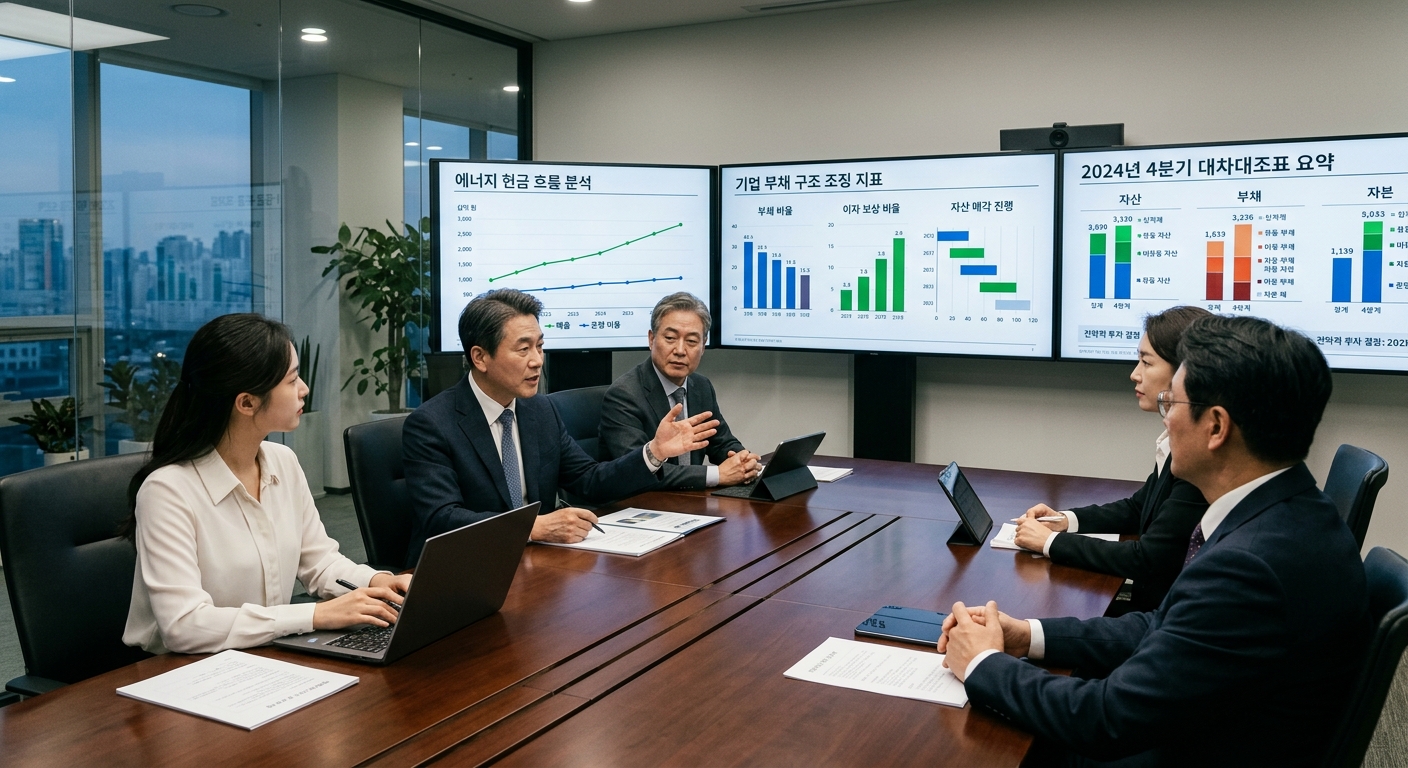
Research centers across major domestic securities firms evaluate this merger as a decisive turning point in cutting off SK On's liquidity overhang.
According to analysis from institutions including Hana Securities, injecting SK E&S's cash flow will defend the annual interest coverage ratio and alleviate pressures regarding external credit rating downgrades.
Furthermore, physical synergies—such as lowering direct raw material procurement costs by pairing SK Earthon's upstream resource development with SK E&S's LNG terminals and distribution networks—are actively highlighted.
Global credit rating agencies such as S&P and Moody's maintain a cautious stance: while business diversification and short-term financial buffers are positive, reducing the absolute level of net debt will take time.
Amid foreign exchange levels hovering around 1,337 won, foreign and institutional investor flows reflect a wait-and-see posture, focusing on post-merger consolidated earnings results and the pace of debt reduction rather than chasing short-term gains.
Risk Factors
The most fundamental risk is a prolonged slowdown in EV demand (the EV chasm), which could delay the timing of SK On's turnaround to operating profitability.
If the cash flow generated by SK E&S is depleted excessively to cover SK On's CAPEX and fixed-cost deficits, the capacity for expanded shareholder returns could be constrained.
Financial costs tied to inherited SK E&S debt and Redeemable Convertible Preferred Shares (RCPS) assumed during the merger process also represent a non-negligible burden.
Externally, volatility in global crude oil and LNG import prices stemming from Middle East geopolitical crises, alongside refinancing yield pressures on corporate bonds driven by the Bank of Korea's policy rate trajectory, remain ongoing variables.
Investment Perspective
The combined SK Innovation has transformed from a single, vulnerable structure focused on refining and batteries into a multi-energy portfolio spanning traditional fossil fuels, LNG, renewables, and batteries.
In terms of asset health, the company has cleared the most acute phase of liquidity concerns, yet step-by-step verification is required to see whether combined synergies will translate into per-share equity value appreciation.
For conservative investors prioritizing a balance between profitability and financial leverage, an appropriate strategy would involve verifying EBITDA generation levels and net debt trends in the first consolidated quarterly earnings report following the merger.
Given macro volatility and the KOSPI Fear Index sitting in 'Extreme Fear', approaching the stock from the perspective of a medium-to-long-term cash flow turnaround appears more sensible than betting on short-term technical rebounds.
Investment Checkpoints Q&A
Q1. What is the official timeline for the merged entity's launch?
A1. Following board resolutions on July 17, 2024, and approval at the extraordinary general meeting of shareholders on August 27, the companies finalized their official merger launch date for November 1, 2024.
Q2. What is the merger ratio and how does corporate governance change?
A2. The common share merger ratio was set at 1 : 1.1917417 (SK Innovation : SK E&S), expanding the equity stake of the largest shareholder, SK Inc., to approximately 55.9% in the merged entity.
Q3. What is the primary financial improvement expected from this merger?
A3. By integrating SK E&S, which delivers KRW 1 trillion to 2 trillion in stable annual EBITDA, overall cash generation expands, building a financial defense to absorb heavy battery CAPEX requirements.
Q4. Are there concerns regarding shareholder value dilution from new merger shares?
A4. While the issuance of new shares causes near-term EPS dilution, this is expected to be offset by removing the liquidity discount through the massive injection of proven, cash-flow-generating assets.
Q5. What are the key variables for future stock price and valuation re-ratings?
A5. Key determinants include the timing of subsidiary SK On's quarterly operational turnaround and whether tangible cost-reduction synergies materialize from connecting upstream assets with SK E&S's direct LNG sourcing.