
Hello, this is Daily Stock, delivering in-depth analysis on key momentum across global tech and the Nasdaq market.
Key Takeaways
Ahead of Amazon's Q3 2026 earnings release, market attention is focused on accelerating growth in its cloud division (AWS) and artificial intelligence (AI)-driven cost-reduction benefits across its retail logistics segment.
As the return on investment (ROI) for massive capital expenditures (CAPEX) across megacap tech faces intense scrutiny, Amazon continues to absorb enterprise demand through its proprietary AI accelerator, Trainium, and the Bedrock ecosystem.
Within logistics infrastructure, warehouse robotics automation and AI routing technology are serving as primary pillars protecting operating margins in the North American commerce segment.
As of intraday October 15, 2026 (preliminary), the Nasdaq Composite stood at 26,692.87, while the proprietary Daily Stock Fear & Greed Index recorded a reading of 32.4 (Fear) for the Nasdaq, reflecting widespread wait-and-see sentiment ahead of big tech earnings.
Market Conditions Snapshot
As of intraday October 15, 2026 (preliminary), the global macroeconomic backdrop continues to keep growth stocks sensitive to valuations amid volatility in the 10-year US Treasury yield (US10Y) and a modest rebound in the US Dollar Index (DXY).
On the same day, the KOSPI stood at 5,689.59, the KOSDAQ at 787.33, and the USD/KRW exchange rate traded at 1,339.50 KRW during intraday sessions.
According to the proprietary Daily Stock Fear & Greed Index, investor sentiment in the Nasdaq registered at Fear (32.4), cooling down from Neutral (42.1) one week earlier, and continuing a cautious tone seen at Fear (31.0) one month ago and Fear (28.3) three months ago.
Domestic markets also showed strong risk-averse sentiment, with the KOSPI Fear & Greed Index currently registering Extreme Fear (6.4), down significantly from Fear (32.5) one week ago, Neutral (42.5) one month ago, and Extreme Fear (12.1) three months ago.
Against this macro backdrop, the broader tech sector is closely monitoring AWS's order backlog and quarterly revenue rebound strength amid intensifying competition with Microsoft's Azure and Alphabet's Google Cloud.
With the Cboe Volatility Index (VIX) responding to Treasury yield fluctuations, Amazon's quarterly operating income guidance is considered a pivotal factor that could dictate the near-term direction of both the Philadelphia Semiconductor Index (SOX) and the Nasdaq 100 Index.
| Indicator / Category | Metrics and Figures (2026-10-15 Intraday Preliminary) | Remarks |
|---|---|---|
| Nasdaq Composite | 26,692.87 | Awaiting major tech earnings |
| USD/KRW Exchange Rate | 1,339.50 KRW | Monitoring FX volatility |
| KOSPI / KOSDAQ | 5,689.59 / 787.33 | Intraday basis (preliminary) |
| Nasdaq Fear & Greed Index | Current: Fear (32.4) / 1W Ago: Neutral (42.1) | Proprietary Daily Stock index |
| KOSPI Fear & Greed Index | Current: Extreme Fear (6.4) / 1W Ago: Fear (32.5) | Proprietary Daily Stock index |
| Amazon Stock Status | Intraday price pending verification (based on latest data) | Awaiting earnings guidance |
Financial Analysis
Amazon's Q3 earnings framework rests primarily on double-digit reacceleration in cloud (AWS) and retail margin expansion driven by logistics efficiencies.
According to market consensus, Amazon's Q3 net sales are projected to range between $197 billion and $202 billion, with operating income targeted in the mid-$22 billion range.
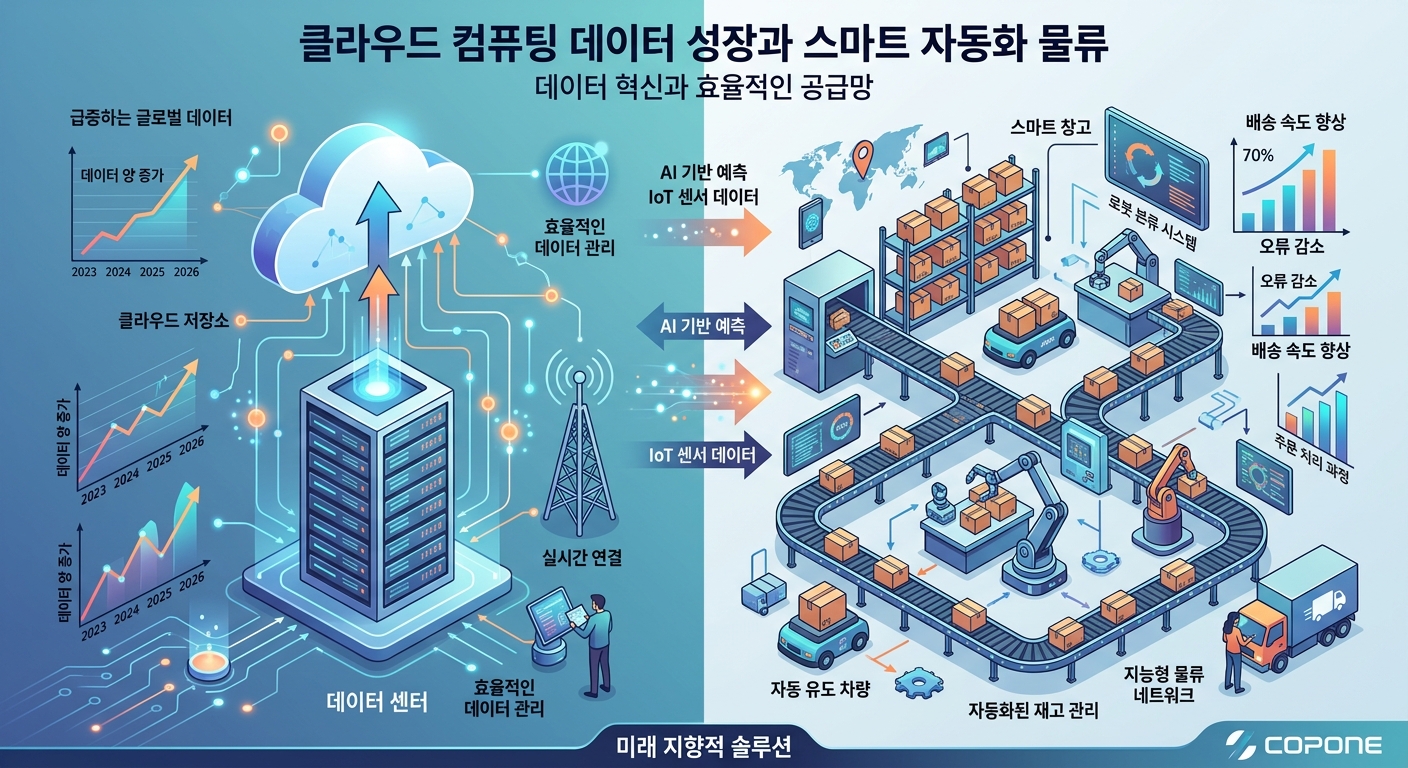
AWS is expected to achieve year-over-year revenue growth of approximately 18% to 20%, powered by an explosion in generative AI workloads and the completion of corporate cloud-optimization cycles.
Expanded adoption of internally developed silicon—Trainium2 and Inferentia—reduces dependency on expensive Nvidia GPUs, serving as operational leverage that supports AWS operating margins in the mid-to-high 30% range.
In the retail and logistics segments, the eight-region network regionalization, combined with the deployment of autonomous mobile robots like 'Proteus' and robotic arms like 'Sparrow', is driving down processing costs per unit.
As AI allocation on fulfillment floors and route-optimization software mature, North American e-commerce operating margins are showing a structural shift toward the mid-to-high single digits.
Valuation
Amazon's enterprise valuation is increasingly appraised via EV/EBITDA and operating cash flow (OCF) multiples—which account for capital expenditure scale—rather than traditional net income-based price-to-earnings (P/E) ratios.
With Amazon's annual CAPEX projected to reach around $200 billion in 2026 for infrastructure and AI expansion, market multiple calculations have shifted toward a more conservative stance.
Amazon's forward EV/EBITDA currently sits in the middle of its historical band, retaining a premium over the S&P 500 large-cap growth average.
If the 10-year US Treasury yield (US10Y) trends higher, long-term cash flow discount rates will rise, presenting the risk of multiple compression for high-capex growth names.
Conversely, if AWS's share of high-margin revenue expands and free cash flow (FCF) protection is proven through retail logistics efficiencies, multiple re-rating from a conventional e-commerce player to an enterprise AI platform remains viable.
Compared to other Magnificent Seven constituents in the Nasdaq 100, Amazon's lower reliance on single hardware product cycles and its three-pronged cash-flow engine—spanning subscriptions (Prime), digital advertising, and cloud—provide a solid valuation floor.
Expert & Institutional Analysis
Major Wall Street investment banks largely maintain constructive investment ratings on Amazon while fine-tuning their near-term price targets.
Wells Fargo expects Amazon's Q3 performance to meet the upper end of market expectations, citing potential AWS growth reacceleration in Q4 as a central catalyst.
Institutional analysts at Cantor Fitzgerald and other brokerages noted that despite elevated near-term depreciation costs from aggressive CAPEX, excess cloud demand will continue driving bottom-line results.
Specifically, they highlight that the annual run-rate of AWS AI-related revenue maintains triple-digit growth, providing evidence that enterprise AI spending is converting into tangible, realized demand.
Concurrently, market observers advise measured scrutiny regarding the near-term monetization of consumer AI assistants and agentic commerce.
Prevailing opinion holds that a sustainable near-term share price rebound hinges less on Q3 headline revenue figures and more on the strength of Q4 holiday shopping season guidance and AWS operating margin retention.
Risk Factors
The most notable risk is potential monetization delays surrounding massive AI infrastructure investments (CAPEX).
With datacenter buildout and grid interconnect costs escalating rapidly, any lag in corporate AI adoption relative to market expectations could compress operating margins.
Second is the risk of decelerating e-commerce gross merchandise value (GMV) tied to macro headwinds and consumer spending fatigue.
If cumulative inflationary pressures and stagnant real disposable income persist, high-margin ad revenues and unit sales margins across general retail categories could face downward pressure.
Finally, global regulatory and antitrust overhangs cannot be dismissed.
Antitrust scrutiny from regulators such as the US Federal Trade Commission (FTC) alongside potential mandates to restructure platform marketplace fee structures could drive up future business operating costs.
Investment Perspective
Amazon stands at an inflection point, evolving from an online retail heavyweight into an integrated tech platform uniting AI infrastructure with physical automation.
If accelerated AWS expansion and automated warehouse operations translate into realized operating profits, the company's medium-to-long-term fundamentals should remain robust.
In the short term, however, with the Nasdaq Fear & Greed Index at 32.4 (Fear), a disciplined and defensive stance toward macro volatility is prudent.
Factoring in fluctuations in the 10-year Treasury yield and the possibility of conservative Q4 forward guidance, a measured approach—evaluating margin trajectories post-earnings before adjusting allocations—presents a logical strategy.
Investor Checkpoint Q&A
Q1. What is the primary checkpoint for AWS in the upcoming Q3 earnings?
The key focus is whether AWS year-over-year revenue growth exceeds the market estimate of 19% to 20% and whether enterprise AI order backlogs show sustained expansion.
Additionally, investors should verify cloud operating margin resilience supported by growing workload migrations onto Trainium silicon.
Q2. What is the tangible impact of robotics automation on Amazon's profitability?
Warehouse robotics such as Proteus and Sparrow, coupled with AI-driven regional fulfillment architecture, structurally lower the cost-to-serve per order.
This enhances operating margins across North American and International retail, functioning as an internal cash-flow buffer against heavy AI infrastructure investments.
Q3. Could upward revisions to annual CAPEX guidance weigh negatively on the stock?
Historically, announcements of aggressive CAPEX have periodically triggered short-term free cash flow concerns, stoking share price volatility.
However, as long as datacenter capacity additions operate near 100% utilization backed by pre-contracted enterprise demand, such investments can be favorably reassessed as durable long-term growth drivers.
Q4. Through what channel does the 10-year US Treasury yield (US10Y) affect Amazon's equity valuation?
Rising Treasury yields lift discount rates applied to long-dated cash flows, serving as a contractionary catalyst for big-tech valuation multiples.
Conversely, when bond yields stabilize, capital historically rotates back into megacap tech equities with dependable, high-quality earnings.
Q5. What portfolio positioning makes sense under the current Fear & Greed Index environment?
With Nasdaq sentiment lingering in Fear (32.4), staggered positioning that evaluates post-earnings margin fluctuations is preferable to chasing aggressive rallies.
A scenario that pairs active risk management with careful tracking of post-earnings guidance shifts and broader macro liquidity trends remains practical.