
Hello, this is DailyStock, bringing you key context on the market.
Key Summary
Celltrion has aggressively expanded its listings on major U.S. pharmacy benefit manager (PBM) formularies, raising the reimbursement coverage for its flagship new drug 'Zymfentra (subcutaneous infliximab)' to over 90%.
Following its preliminary Q3 results—which delivered a record-high quarterly revenue of KRW 1.5 trillion and an operating profit of KRW 510 billion—earnings momentum is expected to accelerate further in Q4, driven by additional contracts with major PBMs and the rollout of subsequent high-margin product lines.
Current Market Context
The domestic stock market continues to show volatile movements due to sector swings in key large-cap stocks like semiconductors and foreign exchange fluctuations.
Today, the KOSPI closed at 6,008.81, the KOSDAQ finished at 823.88, and the USD/KRW exchange rate recorded 1,336.50 KRW.
According to DailyStock's proprietary Fear & Greed Index, the KOSPI sentiment currently sits at 'Extreme Fear' (9), reflecting extremely dampened investor confidence compared to 'Fear' (37.2) a week ago, 'Neutral' (47) a month ago, and 'Extreme Fear' (12.6) three months ago.
Conversely, the Nasdaq Fear & Greed Index currently stands at 'Neutral' (44.6), showing a gradual recovery from 'Neutral' (42.1) a week ago, 'Fear' (31) a month ago, and 'Fear' (28.3) three months ago.
Amid this macro haze, Celltrion (068270) has displayed solid downside support around the 'unconfirmed intraday price level (around KRW 180,000 based on the latest verified quote)', underscoring its standing as both a defensive and growth stock.
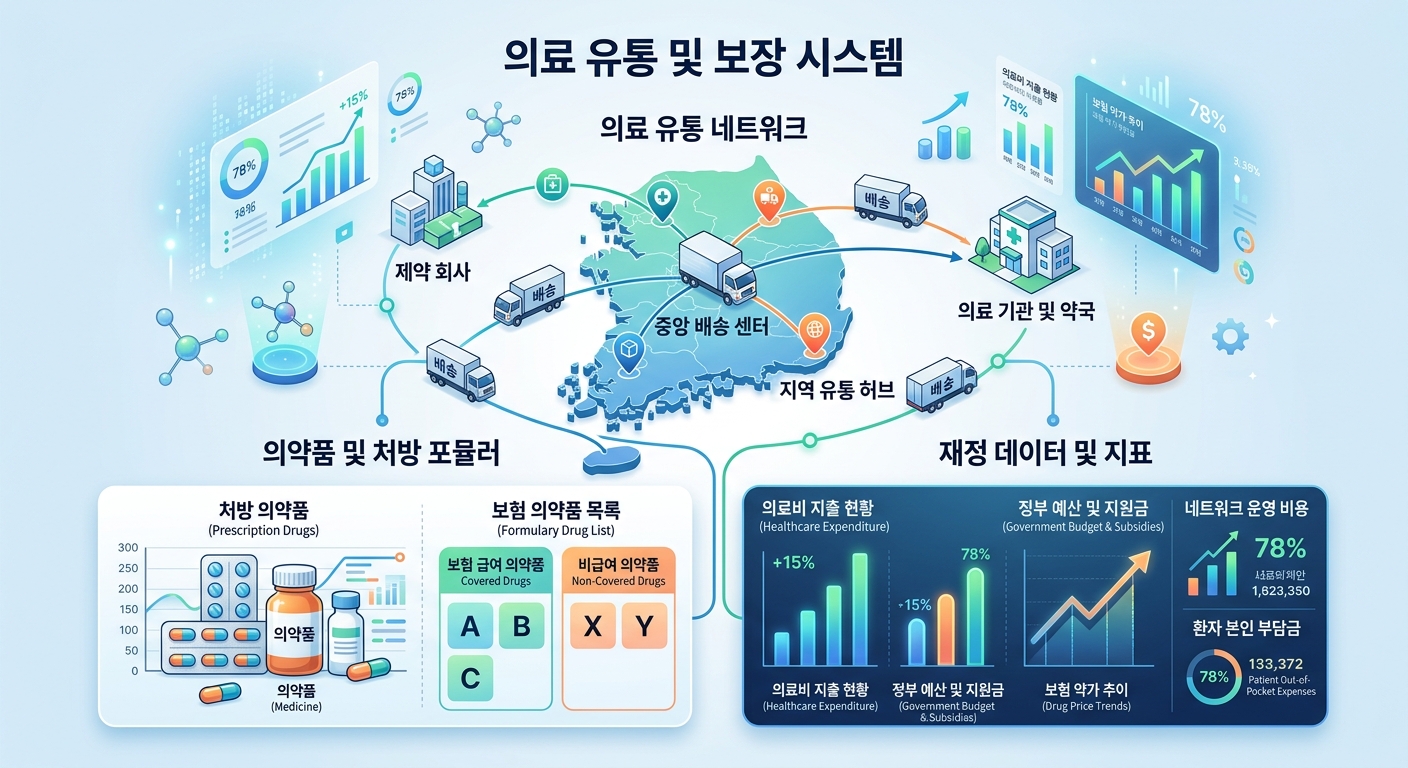
In the U.S. prescription market—where PBM formularies hold the key—Zymfentra has secured placement as a Preferred Drug across most reimbursement networks, including the top three PBMs.
Furthermore, high-margin new products such as the interleukin-6 inhibitor 'Aptozma' and the allergic disease treatment 'Omlyclo' have entered major PBMs like Optum, accelerating prescription uptake.
Financial Analysis
As the temporary burden of amortization from marketing rights and acquired inventory following the merger gradually dissipates, the company's operating margin is normalizing rapidly.
In preliminary Q3 2026 earnings, Celltrion recorded revenue of KRW 1.5 trillion (up ~46% YoY) and operating profit of KRW 510 billion (up ~69% YoY), meeting market consensus expectations.
| Performance & Financial Metric | Q3 2026 Preliminary | FY 2026 Estimate (E) | YoY Change (Est.) |
|---|---|---|---|
| **Consolidated Revenue** | KRW 1.5 trillion | Approx. KRW 5.7 trillion | ~+36% Growth |
| **Consolidated Operating Profit** | KRW 510 billion | Approx. KRW 1.9 trillion | ~+63% Growth |
| **Operating Margin (OPM)** | Approx. 34.0% | Approx. 33.3% | Accelerating turnaround |
| **Zymfentra Reimbursement Coverage** | Over 90% of U.S. private insurance | Maintained above 90% | Prescription barriers cleared |
| **Share of Flagship New Products** | ~62% of quarterly total | Continued expansion in 2H | Portfolio diversification |
The successful playbook of Remsima SC, which established a commanding lead in the European market, is transferring to Zymfentra in the U.S., putting it on track to become a global blockbuster generating KRW 1 trillion annually.
As the company moves beyond the initial fixed-cost phase of its direct-sales infrastructure in the U.S. and enters the stage where prescription operating leverage takes effect, improvements in Q4 gross profit margin (GPM) are anticipated to be significant.
Valuation
Celltrion's 12-month forward price-to-earnings ratio (12MF P/E) is currently hovering around 23x.
This is considerably lower than its historical upper valuation band of 30–40x before the merger, reflecting both the maturation of the biosimilar industry and the stabilization of direct-sales margins.
Even in a peer comparison against KOSPI 200 large-cap healthcare players and global biopharma peers (such as Sandoz), the current valuation is seen as undervalued, as the new-drug premium for Zymfentra's status as a novel drug in the U.S. has not been fully priced in.
Notably, while the KOSPI Pharmaceutical Index pulled back by about 20–30% year-to-date, Celltrion limited its decline to single digits, proving its resilient valuation defense.
Analysts evaluate that if Q4 results and actual PBM prescription data continue to back up the story, there is ample room for a multiple rerating.
Expert & Institutional Analysis
Major domestic brokerage houses are maintaining positive investment opinions, highlighting the expansion of Zymfentra's PBM coverage and shipments of high-margin pipeline products.
NH Investment & Securities maintained a Buy rating with a target price of KRW 270,000, projecting that annual operating profit will surge by over 60% driven by new product rollouts, even against the backdrop of an industry slowdown.
Korea Investment & Securities also set a target price of KRW 260,000, noting that rapid growth from five first-mover new products—including Omlyclo and Aptozma—will drive GPM improvements.
In terms of market supply-demand, even as the USD/KRW rate remains in the mid-1,330 range, selective passive inflows from foreign spot and futures accounts have been spotted, supported by the company's solid dollar-denominated revenue foundation.
Institutional analysts point out that SG&A expense management resulting from the stabilization of the U.S. direct-distribution network will be the primary variable determining an earnings surprise in Q4.
Risk Factors
The most important factor to monitor is the structural pressure of rebates and PBM discount demands inherent to the U.S. pharmaceutical distribution market.
Even after gaining formulary access, if actual distribution discounts widen beyond expectations, net revenue recognition could lag top-line growth or dilute profit margins.
Additionally, if the USD/KRW exchange rate turns sharply lower, FX translation benefits on overseas revenues could be partially offset.
Other watchpoints include intense price-cutting competition among global big pharma in the biosimilar space, as well as institutional uncertainty surrounding PBM reform legislation in the U.S. Congress.
Investment Perspective Summary
While major KOSPI manufacturing names remain exposed to economic slowdown worries and export volatility, Celltrion stands out as an alternative play with distinct defensive earnings strength and an independent growth narrative.
Securing reimbursement coverage across over 90% of U.S. PBMs goes beyond simple channel access—it acts as an actionable catalyst that maximizes prescribing incentives for local clinicians.
Given that the KOSPI Fear & Greed Index remains in the 'Extreme Fear' zone at 9, a conditional strategy of using macro-driven supply-demand shocks for staggered accumulation is rational.
Rather than chasing short-term price swings, investors should take a longer-term view, verifying the completion of additional Q4 PBM contracts and actual total prescription (TRx) trends step-by-step.
Q&A with DailyStock
Q1. Why is Zymfentra's U.S. PBM formulary listing crucial to earnings and share price?
Because the U.S. pharmaceutical market is dominated by private insurance reimbursement, failing to get listed on PBM formularies means patients bear the entire drug cost out-of-pocket, making commercial sales virtually impossible. Securing coverage across over 90% of the network, including the top three PBMs, means prescription barriers have been effectively eliminated.
Q2. What was the core driver behind the strong Q3 earnings?
The high-cost inventory inherited from the merger has largely been depleted, and the share of high-margin new products such as Zymfentra and Aptozma exceeded 60% of total quarterly revenue.
Q3. How does a USD/KRW exchange rate in the mid-1,330 range affect Celltrion?
As an export-driven biopharma company where a substantial portion of sales is settled in U.S. dollars and euros, an elevated FX environment is favorable for KRW-converted revenue and profitability.
Q4. What additional momentum can be expected in Q4?
Potential catalysts include signing additional Preferred Drug agreements with major U.S. PBMs for subsequent biosimilars (Omlyclo, Aptozma, etc.), alongside record-high quarterly prescriptions driven by local online and offline 3P (physicians, payers, patients) marketing.
Q5. What is the biggest downside variable investors should watch out for?
The potential decline in net realized prices due to widening PBM fees and rebates, along with passive selling outflows among large caps triggered by a liquidity contraction in the broader KOSPI market.